Oil Tankers Test Hormuz Reopening
Introduction
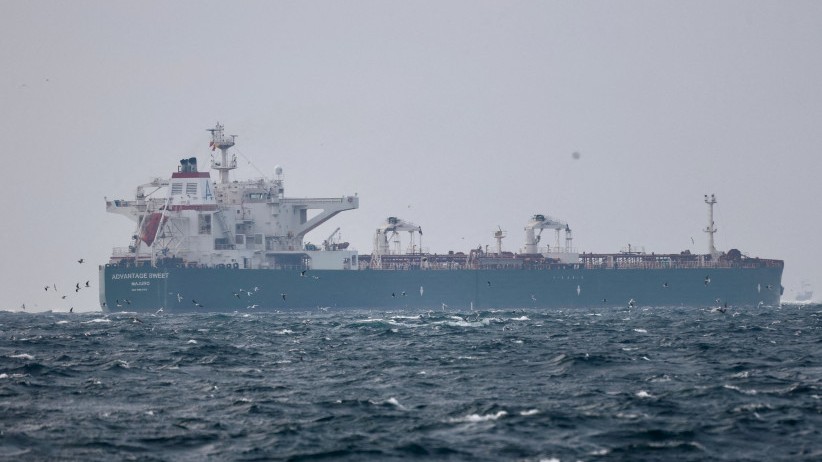
Oil tankers are beginning to test the waters at the Strait of Hormuz. At least eight crude carriers started advancing toward the chokepoint within hours of Iran declaring the Strait open to shipping under a ceasefire framework. Five vessels that had been idling north of Dubai moved first, followed by three more positioned roughly 70 miles west, according to vessel tracking data cited by Bloomberg. It’s the first real sign of life in a corridor that has effectively been frozen since late February, when conflict in the region choked off flows…
This development deserves close attention because it sits at the intersection of policy, capital, and market execution.
In practical terms, this report should be read through the lens of market structure, financing confidence, and whether supply-side changes are strong enough to influence pricing, investment allocation, or policy direction across the oil market space.
What the Headline Signals
Oil Tankers Test Hormuz Reopening
At a surface level, the story appears to be a discrete update. In reality, it reveals something broader about the state of the gas segment. Market participants increasingly care about execution reliability, transmission and logistics constraints, cost discipline, and the durability of demand. That is why even a single project update, policy intervention, or demand-side shift can carry significance well beyond the original headline.
Key quantitative reference points in the current report include 70. These figures matter because they help frame whether the market is moving in a way that supports stronger pricing power, better project bankability, or a more durable operating backdrop for producers, developers, utilities, and investors.
Sector Analysis
From a strategic perspective, the current cycle is increasingly selective. Participants with better execution, clearer routes to monetization, and stronger operating discipline are best positioned to benefit. That applies across the site’s editorial pillars — oil, gas, power, and renewables — but the implications differ by segment. In oil and gas, the market remains highly sensitive to policy and supply balances. In power, the core question is reliability and system resilience. In renewables, attention has shifted toward commercially viable scaling rather than growth headlines alone.
That context matters for this article because the development should not be interpreted in isolation. It fits into a larger pattern in which investors and operators are demanding clearer proof of delivery. Announcements are no longer enough. Markets now reward the ability to convert planning, policy support, and capital access into actual operating performance.
Market Outlook
Looking ahead, the main implication is constructive but selective. If the trend reflected in this report continues, stronger names in the gas space could benefit from improved sentiment, more favorable capital allocation, and stronger strategic relevance. However, weaker projects or operators may struggle if they cannot meet rising expectations around execution quality, timing, and financial resilience.
This is especially relevant for a reports editorial lens, because readers are not only looking for a factual update. They want to understand whether a development changes the balance of opportunity, risk, and strategic positioning. The answer in this case is yes: the market signal appears meaningful enough to support a forward-looking interpretation rather than a purely descriptive one.
Conclusion
The broader takeaway is that this report supports a more nuanced reading of the energy market. The opportunity set remains attractive, but leadership increasingly belongs to participants who can translate structural tailwinds into real commercial results. That is the key message behind this story, and the reason it fits naturally into the site’s reports coverage mix.